Showing posts with label books. Show all posts

March 29, 2011

Pacific Glory


I just finished a new book by P.T. Deutermann titled PACIFIC GLORY. I read it in record time for me, about three sittings. The action scenes which are many and in depth grabs your attention and keeps it. The verbage is graphic and details battle scenes which are no doubt true to life and will get your heart racing. There are several moments where your emotions are grabbed and you, or I it should be am in awe of those who must fight to the death in our many wars. This is a good war book, I would hope he writes another in this genre.

October 9, 2010

OMG, Mite dung?


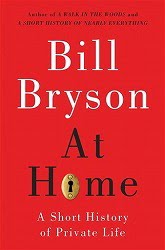
OH MY GOD! I've been reading a review of a new book by Bill Bryson. He's the writer of A WALK IN THE WOODS, about walking the Appalachian Trail. His new book is called AT HOME from which I read this, and I'm not sure I'm glad I did. He takes us on a tour of his house in England and in his comical way explains in depth each room and it's contents would be worth looking into, EXCEPT this blurb where he is writing about bedrooms.

Consider the contents of the bedroom: “It has been calculated that if your pillow is six years old (which is the average age for a pillow), one-tenth of its weight will be made up of sloughed skin, living and dead mites, and mite dung.”

If enough people read this book I fear there will be a terrible run on pillows in stores around the nation. I'm thinking about visiting my local home furnishing store today.

October 3, 2010

Sunday Book Lists


Sunday is a day for kicking back and spreading the newspaper here and there, and sharing articles with each other. I herewith submit one of my favorite Sunday offerings, the book lists. Listed today in hardcover best sellers at number ten is one of my favorite authors Stuart Woods latest, SANTA FE EDGE.

January 9, 2009


I'm reading the new novel by David Lodge, titled Deaf Sentence. I'm only about a third through but I find it really enjoyable if that is the proper word to use.

The principle character has retired and is losing his hearing. He wears hearing aids, but it is getting worse. He has a father who is a widower whom he visits once a week and has terrible guilt feelings about it because he feels great relief when the visit is over. There is much more story to go, and even though I like the book thus far, I must tell you I empathize with this character far too closely.

I have traveled down that same road watching four parents age and die suffering through the same feelings of this character. Adding to the mix, I too am wearing hearing devices as we modern folks now call them.

Lodge I think must also have a problem hearing unaided, because his scenes though sometimes funny are also right on correct and uncomfortable to read. I don't know where the story will take me and even though I am sometimes a reluctant reader because of the content, I am anxious to continue.

A portion of one page that is in a way humorous, but not really:

I got up this morning before Fred (short for Winifred) and was having my breakfast when she came into the kitchen in her dressing gown. She said 'Good morning, darling', and then, going over to the stove, said something else which I didn't catch because I wasn't wearing my hearing aid; I took it out last night in the family bathroom, which is my bathroom when there are no family or other guests in the house, before going to bed, and it was still there. I said 'What?' and she repeated the utterance, but I still didn't get it. She was opening and shutting drawers and cupboards as she spoke, which didn't help. 'Sorry', I said, 'I haven't got my hearing aid in - it's upstairs.' she turned to face me and said more loudly what sounded like 'long stick'. I said, 'What do you want a long stick for?' My mind was already considering the possibilites - to recover something that had rolled under the bed? Or fallen down the back of a chest of drawers? She came closer and said, 'Saucepan. Long-stick saucepan.' 'What's a long-stick saucepan?' I said. 'You mean a long-handled saucepan?' She raised her eyes to the heavens in despair, and went back to the stove. I thought about it for a minute or two, and then the penny dropped. 'Oh, you mean non-stick saucepan! It's in the top right-hand cupboard.' But I was too late: she was already making her porridge in a stainless steel saucepan which would be much more trouble to clean afterwards. And it was my fault for putting the non-stick one away yesterday in the wrong place.

December 19, 2008


Absolutely no reason to show this picture other than I liked it. Check out this book blog.

December 9, 2008

MY THOUGHTS ON ROBERT B. PARKER

I'm just finishing up the latest Robert B. Parker 'Spenser' novel, ROUGH WEATHER. I like reading a Parker book, for several reasons besides the obvious, he tells a good story, and his books get printed on really heavy elegant paper. His chapters are short, and the story always moves along briskly and if you are of a mind to, you could finish the book in one or two sittings.

His publisher, G.P. Putnam must love the guy. He has three main characters who he writes about with regularity. The star of his stable is a tough private eye named Spenser, who morphed into a television series.

Another character is Jessie Stone, a savvy ex-cop who got canned in LA for drinking on duty and has moved to a small town in Massachusetts to become it's police chief. Another success that has also morphed in a television series starring, in it's irregular showings, Tom Selleck. Not a bad guy to have portraying your made up police chief.

Not to be accused of being anti woman he writes semi-regularly about Sunny Randall, of course another chief of police.

In between he writes about cowboys and other assorted guys and gals. He has written according to the fly leaf of his current book Rough Weather sixty (60) books and I don't know how long he's been doing it, but for the last several years two a year come out regular as clockwork.

I like them all, except for this in his Jessie Stone series. He seems to be hung up on this plot line and won't let it go. The character Jessie is divorced, but he still loves his ex-wife and visa-versa. They spend too much time in each novel critiquing their relationship. It is monotonous and I wish he would move her to the west coast or otherwise dispense with her. The over indulgence and the whining the two do over each other is boring. Please get rid of her.

Otherwise his talent is still in place and I look forward to each new book that comes out, posh paper and all.

October 4, 2008

I know you've run across one of these lists before. I know I have. I like this one though because it only requires that I read 30 books before I die, and I have already read three of the first ten. Here is the list. 30 books you should read

I kind of have a handicap though. I am 71 so I'm getting a little late start. On the other hand I have a little advantage to getting it done, I am retired so I can read until my eyes fall out if I wish. I don't of course but I could. You understand all that I'm sure. The eyes will hang in there long enough I think, but my rear end will only allow sitting for so long. I may have to learn to read while I walk. I read somewhere recently and I forget where but it's not that important that this guy couldn't master speed reading so he had to figure out an alternative. He discovered he could read while he walked during the day, so I guess where there's a will there's a way.

While reading these thirty books will come a little late in making me a more rounded person, it will provide satisfaction like crossword puzzles do. It won't include cheerleaders, or bands playing when you enter the field, so I will have to be satisfied with self congratulations. Kind of an empty finish, I was kind of looking forward to the bands and confetti. Oh well, I will report when I have finished the first five books and let you know what I learned from each. I already know that I will report failure on at least one. I know I will not read WAR AND PEACE. Too long and I already attempted that years ago, but I won't again.

August 6, 2008

McMurtry, the author of Lonesome Dove, generates many nods of appreciation from the older generation for this scene of retaliation against the relentless debilitation of aging.

December 3, 2007


I picked up this paperback at a book sale recently. Check out that price. It was published in 1951 and the picture of James Jones on the back makes him out to look like a pirate from a Hollywood B movie. Now all that aside I think I will soon read it once again. It was one of those books turned into a movie where the movie was as good at least as the book. It happens sometimes.

December 2, 2007


The cover for the book THE POWER OF ONE evokes in me the power of imagination in little boys and not so little boys.


I personally had an imagination that would put me into many roles in my future life. That none of them ever became anything other than imagining does not diminish the thrill I got from them at the time.


Imagination is a path to a virtual test course for experiences that most of us will never run in actuality, and that is okay. Imagination usually makes us bigger than life and possessing powers that we will never possess. As we grow we realize that.


The picture from the cover of the book taps into where almost every boy in the forties imagination ran. We were all flying that airplane and doing heroic things.

July 17, 2007


I am finishing up another in the Toby Peters series written by Stuart Kaminsky. This one is entitled SMART MOVES. As all of his books featuring Toby this one is set in the forties. As in all of his adventures Kaminsky works in notables of the day. This time it is none other than Albert, frizzy head himself, Einstein, and the baritone, actor Paul Robeson running afoul of trouble and needing Toby Peters help extracating themselves, actually Einstein is the one needing protection and Paul gets sucked into the trouble.

As in his other books Kaminsky manages to work in some historical events along the way. In one scene he has Toby attending the Paramount theater in New York when Tommy Dorsey and his band appeared on-stage after the feature film starring Bob Hope finished. He finds himself nearly the only male in the audience of young teen-age girls waiting for Dorsey's band singer to appear. The band singer, of course, was Frank Sinatra and the girls went wild. It was the first time something like that happened in those days. It was not unlike the girls screaming when the Beatles appeared back in the sixties.

He adds other pieces of history as the story proceeds. The Toby stories are not expected to be taken real seriously, but to be enjoyed as you are transported back to those days of the forties.

May 31, 2007


When I was growing up I read this primer by Irving Shulman on playing nice in the streets. I still remember it, so it must have left an impression.

May 27, 2007


A Book Review:

I have not read the book DEATH BE NOT PROUD, by John Gunther yet, but I will check my local library for it. Non-fiction books written by survivors of tragedies such as John Gunther in this book are usually inspirational, but so depressing. I'll take a chance

The following is exerpted from pawprints.com


John Gunther
(1901–1970)

Anecdote...

Clifton Fadiman recalls:

John and Frances Gunther's son, Johnny, died in his eighteenth year, and was buried on July 2nd [1947]. He was a handsome, tall, fair-haired boy. He went to Deerfield Academy where he majored in mathematics and chemistry. For fourteen months he had suffered from a brain tumor for which he had had two operations. But even after the second, he passed his examinations for Columbia. He was one of the finest, bravest boys we've ever known. After his first operation, the doctors asked John and Frances about the advisability of telling Johnny what was the matter with him. He was so intelligently interested that the doctors thought it wiser to explain, and the older Gunthers agreed. The surgeon went to Johnny alone and told him the full gravity of a brain tumor. The boy listened carefully, then looked the doctor in the eye and asked, "How shall we break it to my parents?' "

[Gunther himself tells the story of Johnny's illness and death in his book "Death, Be Not Proud," 1949. It is a deeply moving memoir of a brave, intelligent, and spirited boy.]

May 16, 2007


From Franklin and Winston, by Jon Meacham I found this picture with these words: "I have no one but you to break the loneliness of bustling and bustled existence." The words of Winston Churchill pictured with his wife, Clementine on the Thames during the Blitz, September 25, 1940. How fortunate he was to have a loved one to be a trusted confidante, someone, perhaps the only one, to whom he could speak candid, unfiltered thoughts that he knew would be revealed to no one.


I think about the complete nonsense I have uttered to my confidante, my wife, through the years and I shutter to think that anyone would know how utterly stupid unguarded words between loved ones could sound if they were revealed. After all most of us do not speak for history, but stupid is stupid and we would not like it revealed how really stupid we talk from time to time. Confidantes listen, nod, sometimes comment, but always are trusted with all your thoughts. Churchill was fortunate to have a Clemmie by his side.

March 18, 2007


AMERICA'S GREAT DEPRESSION


Two books that will take you back to those days and let you listen to those that endured those times. Highly recommend both.


Martin Kelly, one of the narrators at YOUR GUIDE TO AMERICAN HISTORY breaks it down for us into five causes for the Depression. Could it happen again? I don't think so. But at the time it seemed a catastrophe that would never end. It began in 1929 and continued until WWII.


At the height of the Depression in 1933, nearly 25% of the Nation's total work force, 12,830,000 people, were unemployed.

Wage income for workers who were lucky enough to have kept their jobs fell almost 43% between 1929 and 1933.


Top 5 Causes of the Great Depression
From Martin Kelly,
Your Guide to American History.

What caused the Great Depression, the worst economic depression in US history? It was not just one factor, but instead a combination of domestic and worldwide conditions that led to the Great Depression. As such, there is no agreed upon list of all the causes of the Great Depression. Here instead is a list of the top reasons that historians and economists have cited as causing the Great Depression.

The effects of the Great Depression was huge across the world. Not only did it lead to the New Deal in America but more significantly, it was a direct cause of the rise of extremism in Germany leading to World War II.

1) Stock Market Crash of 1929
Many believe erroneously that the stock market crash that occurred on Black Tuesday, October 29, 1929 is one and the same with the Great Depression. In fact, it was one of the major causes that led to the Great Depression. Two months after the original crash in October, stockholders had lost more than $40 billion dollars. Even though the stock market began to regain some of its losses, by the end of 1930, it just was not enough and America truly entered what is called the Great Depression.

2) Bank Failures
Throughout the 1930s over 9,000 banks failed. Bank deposits were uninsured and thus as banks failed people simply lost their savings. Surviving banks, unsure of the economic situation and concerned for their own survival, stopped being as willing to create new loans. This exasperated the situation leading to less and less expenditures.

3) Reduction in Purchasing Across the Board
With the stock market crash and the fears of further economic woes, individuals from all classes stopped purchasing items. This then led to a reduction in the number of items produced and thus a reduction in the workforce. As people lost their jobs, they were unable to keep up with paying for items they had bought through installment plans and their items were repossessed. More and more inventory began to accumulate. The unemployment rate rose above 25% which meant, of course, even less spending to help alleviate the economic situation.

4) American Economic Policy with Europe
As businesses began failing, the government created the Hawley-Smoot Tariff in 1930 to help protect American companies. This charged a high tax for imports thereby leading to less trade between America and foreign countries along with some economic retaliation.

5) Drought Conditions
While not a direct cause of the Great Depression, the drought that occurred in the Mississippi Valley in 1930 was of such proportions that many could not even pay their taxes or other debts and had to sell their farms for no profit to themselves. This was the topic of John Steinbeck's The Grapes of Wrath.

March 15, 2007


COVER ART

How important is the cover art on books or magazines? I think it is very important. As my eyes first scan a book or magazine the first thing it sees is the artwork. After that the authors name and/or the title will draw me to investigate further. But first it is the art on the cover. Like that old much quoted line, A picture is worth a thousand words, cover art will get your attention first before you investigate further. If the cover art is good, it will on its own give the looker an idea of what's inside the covers. It, of course, does not guarantee what you get when you start reading. I have been fooled, or enticed by the wrappings a few times when the book is less than its cover. But maybe that's part of the fun of book buying, trying to judge in those few moments if you should lay down some pretty heavy cash and take it home with you.

The cover art shown is by Peter Thorpe and in its simplicity it conveys a feeling of warmth and tranquillity and a good book, a great match of place and activity; it caught my eye.

The other is no less a subject than a label for a brand of beer, but like any good cover art, it caught my eye. If I found myself in a bar and had to order something I might very well buy that particular brand because of the label. For me that is as good a reason as any, as I have never yet found a beer that tastes good to my palate. I always find them too bitter for more than a few slugs of the brew. But besides the cover art, I have found beer ads on television to be the most persuasive of all ads. They make it look so darn good, and for me I know it's not, but the power of advertising is something.

March 12, 2007


While taking my usual morning browse, I happened upon this picture from a site called: ERLEND MORK. I'm reminded of the predictament I sometimes fall into when I try to read two, three, or even four books simutaneously. I'm not sure I do myself, or the books a favor when I attempt this. The situation occurs usually when I reserve books at my local, (very good) library, and they all become available at the same time. An overdose of the moveable feast I'd say. Oh well, I am slow to take a lesson from past experiences, as far as books go, and will put myself in that situation again I'm sure. The picture has a title, it's called: The weight of a thought.

July 11, 2006

I start a new book and rewatched a video that I think quite a lot of. The video is called, THE DEAD (not a horror movie) directed by John Huston, his last film. It stars his daughter Anjelica Huston and Donal McCann. I like it because it is such a civilized film. It concerns a dinner party given at the turn of the century in Dublin. It was adapted from a couple of books by James Joyce. It is a relatively short movie that displays civility and conversation as it used to be practiced. Of course the actors are reading lines, but I forget that soon enough and am entranced by it all. In the final analysis it is a love story about a long dead boy for Anjelica and her memories that surge in upon her.

The new book I started is called: THE DEFINING MOMENT by Jonathan Alter. It is about the first 100 days of FDR's first term. I'm not too far into it yet, but if the rest if anything like the beginning it is going to be an easy read. I have learned many things already, or more fully things I already know. Of course I think the man was the greatest president of the twentieth century so I am a sympathetic critic. I still find it amazing that so many people hated him then and their decendants still do for what reasons I'm not sure. It is without question that he was the architect of the nations recovery from the depression which ended with the beginning of the second world war.

May 10, 2006


What was the best purchase you ever made?

What was the best purchase you ever made? Maybe I should define that a little bit, make the parameters a little more exact. How about comparing amount of money paid for the object to amount of hours of enjoyment it returned. Of course this is all a setup. I have a purchase in mind already. A couple years ago, at an annual used book sale I attend each year, I picked up a book and added it to my sack of other goodies. The rationale at used book sales is different than the rules buying at a bookstore. At a bookstore the costs are prohibitively high so your selection process is much more strict. If you’re paying out twenty-five bucks and more per pop, you know you have to be convinced that you are buying the corresponding amount of enjoyment per dollar spent, not always easy.

But at a used book sale the fun is put back into the process. At twenty-five cents for a paperback and fifty cents to a dollar for the hardcover, it is all changed. You can buy a book because you once read something by the same author and enjoyed it, so maybe you will like this one by the same guy. Or perhaps the cover art grabs you, or the title interests you, whatever, if it grabs you, pick it up and toss it into your grocery store size bag, which are kindly provided by the hosts of the sale so you will keep browsing and adding to the bags contents. It is one of the best hours I spend each year rummaging through books that were once pristine and full of promise to the buyer. Now they are here among other much used or slightly used compatriots being once again analyzed for their worth. Which brings up another buying point; is a book in immaculate condition a better choice than the other which has obviously been much handled or ill-kept, is that a clue to its value? The answer is yes or no because, of course, there is no answer. But every once in a while luck enters the process and a book will be picked up by the person it was meant for. This happened to me once.

The best purchase I ever made, using the cost versus enjoyment-received criteria, was the book I mentioned in the first paragraph. It was the book titled, TO SERVE THEM ALL MY DAYS, by R.F. DELDERFIELD. I love this book. I have read it twice now, and the second reading was a good or better than the first. I suppose judgment of a books value is subjective and not objective. It meets your internal value system or it doesn’t. It’s as easy as that.

It is a book of over six hundred pages and I am a reader of each word, versus the fast reader who gulps paragraphs at a time, so the amount of time to read the entire book is not really calculable, but many, many hours to read the whole work is a fair statement. I enjoyed each and every hour I spent on it, each time, and all for twenty-five cents, picked up at the used book sale. This was the best purchase I ever made.