In just about a week it will once again be the anniversary of the day which will live in infamy, as FDR said in his declaration of war. This film by National Geographic tries to figure out why Japan did what they did.
Watch more free documentaries
Showing posts with label war. Show all posts
Showing posts with label war. Show all posts
November 29, 2010


December 6, 2008
THE BEGINNING

The day the Japanese became the Japs.
The Japanese war lords were rampaging across Asia, making their intention to control the continent evident. The Americans knew what they were up to, but the country was divided into preparing for war and/or staying out of it and hoping it would go away. In December 1941 the politics of non-intervention still held sway, even though Roosevelt saw the inevitability of it all.
On December 6, Admiral Nogumo, the task force commander of the invading force, opened a top secret message that said 'climb mount niitaka', the coded message that set into motion the attack on December 7, 1941 upon Pearl Harbor in the Hawaiian islands.
On December 7 the attack that decimated the American fleet of battle ships commenced at 7:55 in the morning and was completed 110 minutes later. It filled the American people with a hate that continued until August 1945 when President Truman authorized two atomic bombs to be dropped on Hiroshima first, and then Nagasaki, which ended the second world war.
It took arguably decades for the American people to revert to the more polite term of Japanese so deep was their hatred. But the war that started in violence against an unprepared country, ended with violence against the hostile Japanese from a previously unknown weapon. The age of the atom was born.
WWII deaths suffered by the nation of Japan-2,700,000
WWII deaths suffered by the nation of USA-418,500
War is an abomination, and a last resort for civilized peoples.
THE END


The day the Japanese became the Japs.
The Japanese war lords were rampaging across Asia, making their intention to control the continent evident. The Americans knew what they were up to, but the country was divided into preparing for war and/or staying out of it and hoping it would go away. In December 1941 the politics of non-intervention still held sway, even though Roosevelt saw the inevitability of it all.
On December 6, Admiral Nogumo, the task force commander of the invading force, opened a top secret message that said 'climb mount niitaka', the coded message that set into motion the attack on December 7, 1941 upon Pearl Harbor in the Hawaiian islands.
On December 7 the attack that decimated the American fleet of battle ships commenced at 7:55 in the morning and was completed 110 minutes later. It filled the American people with a hate that continued until August 1945 when President Truman authorized two atomic bombs to be dropped on Hiroshima first, and then Nagasaki, which ended the second world war.
It took arguably decades for the American people to revert to the more polite term of Japanese so deep was their hatred. But the war that started in violence against an unprepared country, ended with violence against the hostile Japanese from a previously unknown weapon. The age of the atom was born.
WWII deaths suffered by the nation of Japan-2,700,000
WWII deaths suffered by the nation of USA-418,500
War is an abomination, and a last resort for civilized peoples.
THE END

June 2, 2006
I'm Glad It's Not My Decision
The phrase that runs through my mind every time I think of these events is,
I'm glad I didn't have to make the decision.
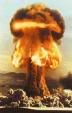
The decision I am writing about is the dropping of the atomic bomb, which Harry Truman made without any sleepless nights, I've read. The other is the fire bombings on Tokyo. There were others also, Dresden in Germany for example, and many others in Japan.
It is one of those decisions from an American point of view at the time was clear and concise. Do it and save many thousands of American lives. The figure of a million lives saved by the dropping of the bomb was close they said. But in hindsight, always an easy thing to do, what horrendous results they wrought. But you say, dead is dead; in the final analysis, of course, there are many levels at which this could be discussed, and they have been and will continue to be for many more generations. But to my mind the fire bombings reached a high or low in the methods used to eradicate human beings. These words below come from a description of the Tokyo fire bombings:
(In 1944 a group of manufacturers including Standard Oil and DuPont came up with a jellied gasoline called napalm. It would stick to anything and set ferociously hot fires.)
On March 9, 334 B-29s took off from Guam, arriving in Japan under good weather conditions. The planes were stacked up from 4,900 ft. to 9,200 ft. They dropped one 500-pound cluster of firebombs every 50 feet. The target area was 3 by 5 miles, containing a large industrial complex, however each square mile held over 100,000 civilians. The bombs fell, and within thirty minutes the resulting fires were out of control, driven by 40-mph winds. Tokyo, hit by strings of incendiaries, became a holocaust. Water boiled in the canals after the temperature reached over 1800 degrees F. For three hour the B-29s kept coming. Only a few fighters appeared causing little damage. We lost 14 planes with damage to 42. An official Japanese count reported nearly 84,000 killed, 41,000 injured, and over 250,000 buildings destroyed in this one raid. 16 square miles burned out.
The good guys won and for this I was and am ecstatic. I am so very glad for those who didn't have to make those invasions on Japan and went on to live a full life. I also understand that for those whose job it is to make war that they would use the tools they needed to get the job done, and the sooner that is done the better. But sometimes the grotesqueness of the results seems inhuman and certainly we would learn from such experiences. But no, we do not. America for example since WWI has been in some conflict about every twenty years. After each of these conflicts the unanswered question arises, there must be a better way to solve our problems, but perhaps not. Sad isn't it.
Subscribe to:
Comments (Atom)