This scene from John Adams, seen last year on HBO, is a grim reminder that slaves built our White House. It is not a secret, but it certainly is not something our country is proud of.
Even though it happened two centuries ago and Mr. Lincoln took the lead in correcting the inequities it still seems like a family secret that we in the family know what happened but we don't really want to talk about it. Well it did happen in America, but what also has happened in America, we have elected to lead us for the next four years a black man. That is progress. It is not redemption of the wrongs perpetrated on the black race two centuries ago, that can only happen in each of our hearts, but it is a start Americans, it is a start.
Showing posts with label history. Show all posts
Showing posts with label history. Show all posts
October 13, 2010


March 21, 2008
These two moments from two of America's best, where it seemed that they were thinking and talking on the same subjects in the 1950's. It seems rather prophetic about events that took place here in my country in the first decade of the twenty first century.
Along with that, Senator Hagel this week is coming to the conclusion that perhaps it is the time for a third party, a party for men and women of more independent thinking to be thought of more seriously than ever before. Here is the piece from Google video:
Along with that, Senator Hagel this week is coming to the conclusion that perhaps it is the time for a third party, a party for men and women of more independent thinking to be thought of more seriously than ever before. Here is the piece from Google video:
July 17, 2007
From American Heritage. Com. I miss the lunch counters of stores like these and some drug store chains. They are from another day I understand, but I still miss them them.

Why Woolworth Had to Die
By Joshua Zeitz
Ten years ago today, on July 17, 1997, F. W. Woolworth announced that it was closing the last 400 of its “five-and-ten-cent” stores, laying off 9,200 workers and drawing to a close 117 years as the flagship retailer of downtown America. “Woolworth was 100 years ago what Wal-Mart is today,” the historian Robert Sobel pointed out to The New York Times. It had once seemed to be a store that would last forever.
Frank Woolworth opened his first dry-goods store in 1879, in Utica, New York. His first sale was a five-cent shovel—the most expensive item he had. Later that year he opened a larger store in Lancaster, Pennsylvania, and with business booming, in 1880 he raised his price ceiling to ten cents, thus ushering the term “five-and-ten” into the American lexicon. In 1910 the Woolworth lunch counter made its debut, at the 14th Street store in Manhattan, and in 1912 the fast-growing business subsumed five competing chains to build an empire of 596 stores nationwide, with $53 million in annual sales (equal to $1.1 billion today).
Woolworth, who died a very rich man in 1919, wasn’t the only entrepreneur to build a retail empire as America urbanized and gained wealth. By the turn of the century, with work hours on the decline and real wages rising, millions of ordinary people were patronizing not only Woolworth but also department stores such as Macy’s and Filene’s, where they could find a wide variety of goods at low prices. Even farm families remote from cities and towns came to rely on the stores. Rural free delivery and parcel post, two services introduced in 1896 and 1913 respectively, enabled anyone to purchase by mail order.
But fundamentally, the rise of chain stores like Woolworth took place in cities. On the eve of the Civil War, less than 20 percent of Americans qualified as “urban,” a category that then included all persons living in towns with a population of at least 2,500. By 1920 more than half of all Americans lived in towns or cities, and the number of people living in cities of at least 8,000 had jumped from 6.2 million to 54.3 million. In this new environment, Woolworth became an anchor of the downtown business district.
It didn’t happen overnight, though. As late as 1930, working-class city dwellers still did most of their shopping at corner groceries and mom-and-pop stores, where they often were allowed generous credit. A survey in 1926 revealed that chains accounted for 53 percent of grocery stores in the upscale Oak Park suburb of Chicago but just one percent of stores in the working-class towns of Joliet and Gary. The Depression changed all that, as mom-and-pops found it harder to extend credit and customers found the lower prices at chains like Woolworth impossible to resist. A survey in 1939 showed that 91 percent of lower-income shoppers were now paying cash for their purchases, having evidently abandoned the old neighborhood store for the cheaper, cash-only chains. Woolworth was a prime beneficiary.
Yet even as the downtown chains spread, the groundwork was being laid for their slow but steady death. In the 1950s and 1960s America’s suburban population grew by more than 40 million, led out of the cities by cheap, quality housing and a massive federal highway construction program. By 2000, shortly after Woolworth boarded up its last stores, an outright majority of Americans were suburbanites. Firms like Woolworth had trouble adapting their cut-rate downtown model to the new suburban shopping centers that sprang up around the country. The company stuck to an updated version of the old five-and-ten even as postwar affluence brought a higher standard of living to many of its customers. So it couldn’t compete with new outlets designed for the shopping centers and malls, like Kmart, Target and Wal-Mart, all three of which came into being in 1962 and offered more household goods at bargain prices. By 1970 those “big-box” budget retailers, to be joined later by new discount franchises like Toys “R” Us, Circuit City, T. J. Maxx, Office Depot, and Best Buy, outsold traditional department stores as well as five-and-tens and rang a final death knell for the downtown business districts that Woolworth had long dominated.
In 1993 Woolworth retrenched, closing 1,000 of its stores. The company shifted resources to its more competitive franchises, like Foot Locker and Champs Sports, and gave the Smithsonian its most valuable piece of memorabilia, the lunch counter where four black students in Greensboro, North Carolina, had staged a landmark civil rights sit-in in 1960. The writing was on the wall. “Closing of the Woolworth stores is long overdue,” a retail consultant remarked in 1997. “Today’s Woolworth store was just not viable.” By then, the company was losing as much as $31.5 million per quarter.
Several weeks after its 1997 announcement, Woolworth auctioned off all its display cases, store fixtures, soda fountains, and furniture. It was the end of an era.

Why Woolworth Had to Die
By Joshua Zeitz
Ten years ago today, on July 17, 1997, F. W. Woolworth announced that it was closing the last 400 of its “five-and-ten-cent” stores, laying off 9,200 workers and drawing to a close 117 years as the flagship retailer of downtown America. “Woolworth was 100 years ago what Wal-Mart is today,” the historian Robert Sobel pointed out to The New York Times. It had once seemed to be a store that would last forever.
Frank Woolworth opened his first dry-goods store in 1879, in Utica, New York. His first sale was a five-cent shovel—the most expensive item he had. Later that year he opened a larger store in Lancaster, Pennsylvania, and with business booming, in 1880 he raised his price ceiling to ten cents, thus ushering the term “five-and-ten” into the American lexicon. In 1910 the Woolworth lunch counter made its debut, at the 14th Street store in Manhattan, and in 1912 the fast-growing business subsumed five competing chains to build an empire of 596 stores nationwide, with $53 million in annual sales (equal to $1.1 billion today).
Woolworth, who died a very rich man in 1919, wasn’t the only entrepreneur to build a retail empire as America urbanized and gained wealth. By the turn of the century, with work hours on the decline and real wages rising, millions of ordinary people were patronizing not only Woolworth but also department stores such as Macy’s and Filene’s, where they could find a wide variety of goods at low prices. Even farm families remote from cities and towns came to rely on the stores. Rural free delivery and parcel post, two services introduced in 1896 and 1913 respectively, enabled anyone to purchase by mail order.
But fundamentally, the rise of chain stores like Woolworth took place in cities. On the eve of the Civil War, less than 20 percent of Americans qualified as “urban,” a category that then included all persons living in towns with a population of at least 2,500. By 1920 more than half of all Americans lived in towns or cities, and the number of people living in cities of at least 8,000 had jumped from 6.2 million to 54.3 million. In this new environment, Woolworth became an anchor of the downtown business district.
It didn’t happen overnight, though. As late as 1930, working-class city dwellers still did most of their shopping at corner groceries and mom-and-pop stores, where they often were allowed generous credit. A survey in 1926 revealed that chains accounted for 53 percent of grocery stores in the upscale Oak Park suburb of Chicago but just one percent of stores in the working-class towns of Joliet and Gary. The Depression changed all that, as mom-and-pops found it harder to extend credit and customers found the lower prices at chains like Woolworth impossible to resist. A survey in 1939 showed that 91 percent of lower-income shoppers were now paying cash for their purchases, having evidently abandoned the old neighborhood store for the cheaper, cash-only chains. Woolworth was a prime beneficiary.
Yet even as the downtown chains spread, the groundwork was being laid for their slow but steady death. In the 1950s and 1960s America’s suburban population grew by more than 40 million, led out of the cities by cheap, quality housing and a massive federal highway construction program. By 2000, shortly after Woolworth boarded up its last stores, an outright majority of Americans were suburbanites. Firms like Woolworth had trouble adapting their cut-rate downtown model to the new suburban shopping centers that sprang up around the country. The company stuck to an updated version of the old five-and-ten even as postwar affluence brought a higher standard of living to many of its customers. So it couldn’t compete with new outlets designed for the shopping centers and malls, like Kmart, Target and Wal-Mart, all three of which came into being in 1962 and offered more household goods at bargain prices. By 1970 those “big-box” budget retailers, to be joined later by new discount franchises like Toys “R” Us, Circuit City, T. J. Maxx, Office Depot, and Best Buy, outsold traditional department stores as well as five-and-tens and rang a final death knell for the downtown business districts that Woolworth had long dominated.
In 1993 Woolworth retrenched, closing 1,000 of its stores. The company shifted resources to its more competitive franchises, like Foot Locker and Champs Sports, and gave the Smithsonian its most valuable piece of memorabilia, the lunch counter where four black students in Greensboro, North Carolina, had staged a landmark civil rights sit-in in 1960. The writing was on the wall. “Closing of the Woolworth stores is long overdue,” a retail consultant remarked in 1997. “Today’s Woolworth store was just not viable.” By then, the company was losing as much as $31.5 million per quarter.
Several weeks after its 1997 announcement, Woolworth auctioned off all its display cases, store fixtures, soda fountains, and furniture. It was the end of an era.
August 28, 2006
I exerpted this from Garrison Kiellors writers almanac this morning. I remember the year very well. The following events, plus the assassination of President Kennedy earlier in the decade changed America forever. I believe that decade changed us from a nation who believed we could do anything to a nation of cynics and non-believers. That we still have not recovered speaks ill of those who have the ability to rekindle a belief that we are a country that great gifts were given and we must pay for those gifts with a leadership that is positive and caring. Maybe we never will, I hope though that we do. I think we must.
It was on this day in 1968 that riots erupted outside the Democratic National Convention in Chicago. It had already been one of the bloodiest years of the decade. That February, the North Vietnamese launched their devastating "Tet Offensive," which indicated that the Vietnam War was nowhere near over. Then, in April, Martin Luther King Jr. was assassinated, sparking widespread riots. Two months later, Robert Kennedy was shot and killed at his victory party after the California primary.
In the wake of Robert Kennedy's murder, the Democratic Party establishment chose Vice President Hubert H. Humphrey as their candidate, but the anti-war faction of the party wanted Senator Eugene McCarthy. Thousands of college students and anti-war activists showed up at the convention to protest the choice of Humphrey and the Democratic Party's support of the war in Vietnam.
For the first two days of the convention, protesters shouted insults at the police and threw rocks and other objects. Then, on this day in 1968, the police responded by charging toward Grant Park where thousands of protestors were gathered, attacking everyone in their path with billy clubs and tear gas.
In his notebook that night, the reporter and historian Theodore White wrote, "The Democrats are finished." Hubert Humphrey lost the election to Richard Nixon that year. Before 1968, the Democrats had won seven of the nine presidential elections since 1932. In the ten presidential elections since 1968, Democrats have won only three.
It was on this day in 1968 that riots erupted outside the Democratic National Convention in Chicago. It had already been one of the bloodiest years of the decade. That February, the North Vietnamese launched their devastating "Tet Offensive," which indicated that the Vietnam War was nowhere near over. Then, in April, Martin Luther King Jr. was assassinated, sparking widespread riots. Two months later, Robert Kennedy was shot and killed at his victory party after the California primary.
In the wake of Robert Kennedy's murder, the Democratic Party establishment chose Vice President Hubert H. Humphrey as their candidate, but the anti-war faction of the party wanted Senator Eugene McCarthy. Thousands of college students and anti-war activists showed up at the convention to protest the choice of Humphrey and the Democratic Party's support of the war in Vietnam.
For the first two days of the convention, protesters shouted insults at the police and threw rocks and other objects. Then, on this day in 1968, the police responded by charging toward Grant Park where thousands of protestors were gathered, attacking everyone in their path with billy clubs and tear gas.
In his notebook that night, the reporter and historian Theodore White wrote, "The Democrats are finished." Hubert Humphrey lost the election to Richard Nixon that year. Before 1968, the Democrats had won seven of the nine presidential elections since 1932. In the ten presidential elections since 1968, Democrats have won only three.
May 17, 2006
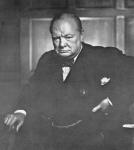
There were two moments in the twentieth century when two men said and did the right things, took the right actions, and I would not be exaggerating to say they saved us all to live another day. There have been innumerable men and women who have done the right thing knowingly or unknowingly that have made our world better for it. But these two men and these two events I believe dramatically allowed us, without being too melodramatic, to continue to live.
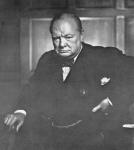
The second man and event was John Kennedy and his advisors defusing the Cuban Missile Crisis. It took the accumulative wisdom of many men and a Russian dictator who had a clear vision of where his bombast had led him and backed off. How close they came to unleashing nuclear war that was frightenly imminent? If everyone had not stepped back for that one moment and saw the clear vision of what the next minutes would reap, it would have been disaster. But they did and we can celebrate the courage and wisdom of all who had the control and the power that day to blow all of us to hell and back for taking one more breath and doing the right thing.
The first man and the events he precluded with his courage and brilliant rhetoric twenty-three years earlier was Winston Churchill when he was the only man in a position to keep Hitler and Germany from conquering all of Europe and turning their attention to the United States who was ill-prepared militarily and politically to hold them off at that time. The time was 1940 and France had surrendered leaving Hitler poised to invade England who stood with no allies except America who had handcuffed Roosevelt from offering any assistance except offering used military supplies, too old, too few and not quick enough. Time and circumstances would bring America into the war, but not until December of 1941. So for a year and a half England was the last barrier against Hitler and his hordes. It is the stuff of what if novelist and historians to how long it would have taken Germany to turn toward America and test our military unpreparedness.
But Churchill like a bulldog refused to allow his country to capitulate and roused them with his brilliant rhetoric and his gallant RAF and held off the Germans and decimated their air force so badly that Hitler decided to send his troops into Russia instead. A move that proved England and Americas salvation. When France surrended in June 1940 Churchill went before his house of commons and delivered this speech that inspired his country to stand and fight until the end. Thank God they did.
What General Weygand called the Battle of France is over. I expect that the Battle of Britain is about to begin. Upon this battle depends the survival of Christian civilization. Upon it depends our own British life, and the long continuity of our institutions and our Empire. The whole fury and might of the enemy must very soon be turned on us. Hitler knows that he will have to break us in this Island or lose the war. If we can stand up to him, all Europe may be free and the life of the world may move forward into broad, sunlit uplands. But if we fail, then the whole world, including the United States, including all that we have known and cared for, will sink into the abyss of a new Dark Age made more sinister, and perhaps more protracted, by the lights of perverted science. Let us therefore brace ourselves to our duties, and so bear ourselves that, if the British Empire and its Commonwealth last for a thousand years, men will still say, "This was their finest hour."
May 13, 2006
I was reading about John Kenneth Galbraith who just died after living to a grand age of ninety-seven years. He was fortunate to have worked for FDR and JFK among others in his long career. His recollections of Kennedy took me back to my early years working in D.C. as a low-level government employee with a wife and our first child.
We were too young to be cynical or think that the world owed us anything and was enjoying the life we were starting out on. Indeed most of the country at that time was not taking on cynicism as a life’s work. We were enjoying the new young president and his optimism and the classiness he exuded. Watching him, as we could in those days, going by in an open car in a greeting parade for the president of Venezuela Mr. Betancourt, bolstered our confidence that anything was possible for our country. He was better looking in person than on TV. Our only regret was that Jackie who was supposed to be in the little parade did not make it.
Then too soon the world changed and the confidence we felt then for our country and ourselves disappeared with him. I think now as an old man how it is today and wonder if ever again we will find the right person at the right time that we can be proud to have him speak for all of us as one nation, not just a blue president or a red president but a president of all of us rich or poor.
We were too young to be cynical or think that the world owed us anything and was enjoying the life we were starting out on. Indeed most of the country at that time was not taking on cynicism as a life’s work. We were enjoying the new young president and his optimism and the classiness he exuded. Watching him, as we could in those days, going by in an open car in a greeting parade for the president of Venezuela Mr. Betancourt, bolstered our confidence that anything was possible for our country. He was better looking in person than on TV. Our only regret was that Jackie who was supposed to be in the little parade did not make it.
Then too soon the world changed and the confidence we felt then for our country and ourselves disappeared with him. I think now as an old man how it is today and wonder if ever again we will find the right person at the right time that we can be proud to have him speak for all of us as one nation, not just a blue president or a red president but a president of all of us rich or poor.
Subscribe to:
Posts (Atom)